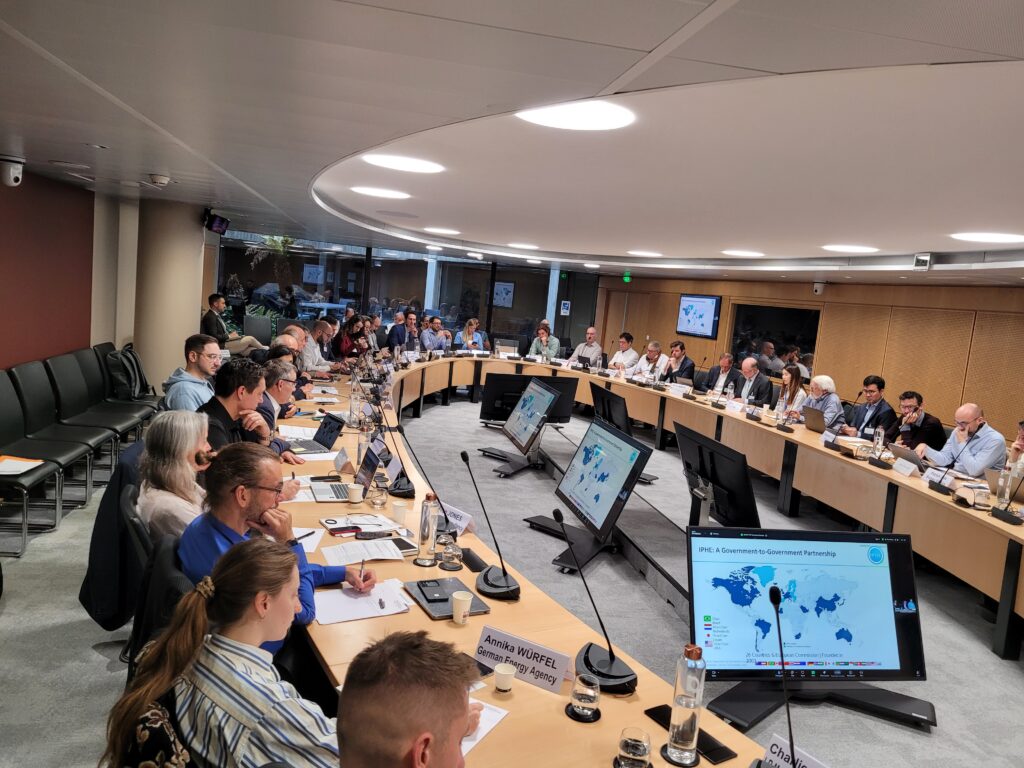
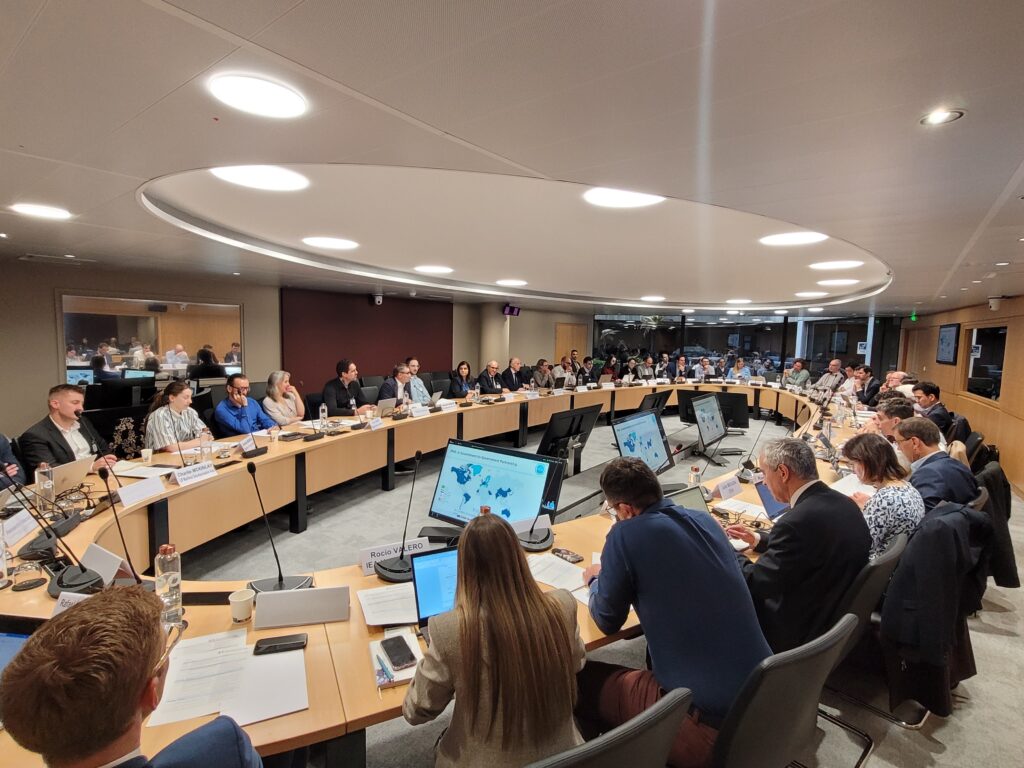
The maritime world is gearing up for a zero-emission future – and fuel cells are at the helm of this transformation. With the IMO targeting a 40% CO₂ reduction by 2030 and new mid-term measures approved in 2025, the pressure is on to deliver cleaner, smarter energy solutions for ships and ports.
This high-level workshop, hosted by the IEA Advanced Fuel Cells TCP in cooperation with global partners, brought together innovators from shipbuilding, port operations, cruise lines, technology suppliers, classification societies, fuel cell manufacturers, researchers, and government agencies.
You can find the agenda and the presentations available for download here:
Agenda
| Time | Input (Download) | Speaker |
|---|---|---|
| 8.30–9.00 | Arrival of participants and registration | |
| 9.00–9.10 | Welcome by the Chair, Introduction of AFC TCP, security/emergency info | Viviana Cigolotti, Chair of IEA AFC TCP, ENEA, Italy |
| 9.10–9.15 | Introduction to AFC TCP and objectives of workshop | Viviana Cigolotti, Chair of IEA AFC TCP, ENEA, Italy |
| 9.15–9.30 | Global Status of Hydrogen | Paul Lucchese, Chair of IEA H2 TCP, CEA, France |
| Regulatory Pathways and Standards for Maritime Decarbonisation | ||
| 9.30–9.50 | International regulations, codes and standards on fuel cell applications and hydrogen in the maritime sector | Laurent Antoni, Executive Director Elect, IPHE |
| 9.50–10.10 | Development of a regulatory framework for the safety of ships using hydrogen as fuel | Alessandro Maccari, Italian Flag Administration, RINA Marine Director of R&D |
| 10.10–10.30 | Hydrogen in maritime: Regulatory (Class and IMO) updates and market updates | Julien Boulland, Bureau Veritas Marine & Offshore, Italy |
| 10.30–11.00 Coffee break | ||
| Technological Advances and Demonstration Projects in Maritime Fuel Cell Applications | ||
| 11.00–11.20 | Hydrogen and Fuel Cells for Maritime Applications – Overview from CleanH2 JU Projects | Lionel Boillot, Clean Hydrogen Partnership, EU |
| 11.20–11.40 | Fuel Cell Solutions: Hydrogen, Alternative fuels and CCS | Patrizio Di Francesco, RINA Services S.p.A. |
| 11.40–12.00 | Fuel cell technologies and applications for deep sea shipping: mapping and techno-economic assessment. Publication | Evangelos Fragkoulis, Mærsk Mc-Kinney Møller Center for Zero Carbon Shipping |
| 12.00–12.20 | Experience of waterways vessels retrofitted for fuel cells & hydrogen and LOHC & fuel cells | Jyrki Mikkola, VTT Technical Research Centre of Finland Ltd |
| 12.20–12.40 | Introducing the hydrogen fuel cell ship project | Naohisa Makihira, Iwatani Corporation, Japan |
| 12.40–13.00 | Economic Potential and Integration Challenges of SOFC-Based Hybrid Ship Powertrains | Lukas Kistner, HD Hyundai Europe R&D Center GmbH, Germany |
| 13.00–14.00 Lunch break | ||
| 14.00–14.20 | MW scale fuel cells for passenger ships – a comparison between ICE only and hybrid layouts | Sebastiaan Bleuanus, Wärtsilä Netherlands BV |
| 14.20–14.40 | Lessons learned from the Pelican Marine Fuel Cell System | Vegard Frihammer, Corvus Energy, Norway |
| 14.40–15.00 | Quiet Power, Clean Seas: PowerCell’s Marine Fuel Cell Experience | Andreas Bodén, PowerCell Group, Sweden |
| 15.00–15.20 | A highly efficient and dynamic SOFC-battery genset for maritime application | Santiago Salas Ventura, DLR, Germany |
| 15.20–15.40 | Next Generation Components for HT PEM and their Relevance in Marine Applications | Emory Sayre De Castro, Advent Technologies, USA |
| 15.40–16.00 | Overcoming sustainability challenges of fuel cell maritime applications: ammonia and methanol cases | Rafael Nogueira Nakashima, DTU, Denmark |
| Roundtable discussion on Key Priorities and Next Steps for the AFC TCP Maritime Task | ||
| 16.00–16.30 | Open discussion, next steps and closing | All, moderated by AFC TCP Chair |
Participants
You can find the workshop participant list here.